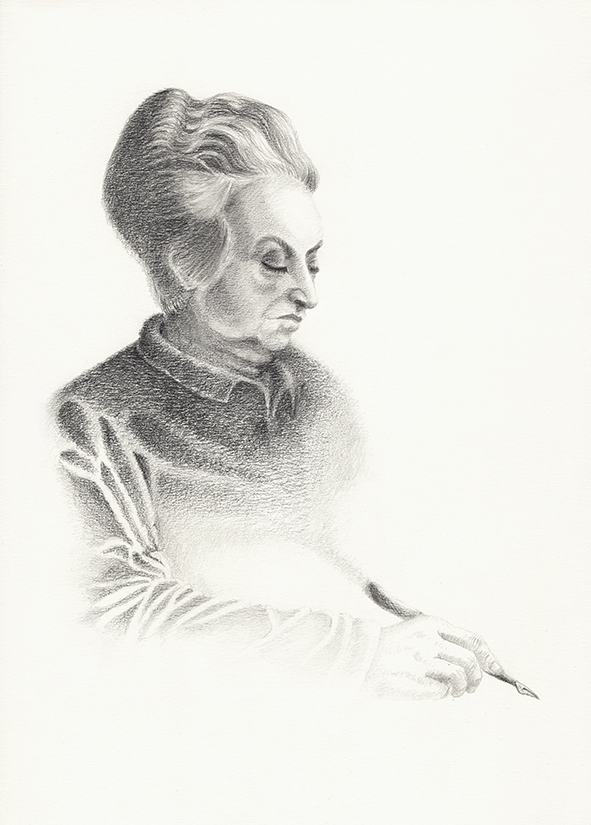
Just to match my love for books and illustration, I eagerly got my heart into this project of Writer’s Portraits. This project contains a small selection of my favourite Latin American writers of all times. People close to me knows that my weakness for Mr Borges is severe, so in order to picture that, in this selection is not one portrait of Jorge Luis Borges, but two! The brief was the following: one portrait full colour for a magazine cover and the other six should be monochromatic (black & white) to illustrate articles in the magazine.
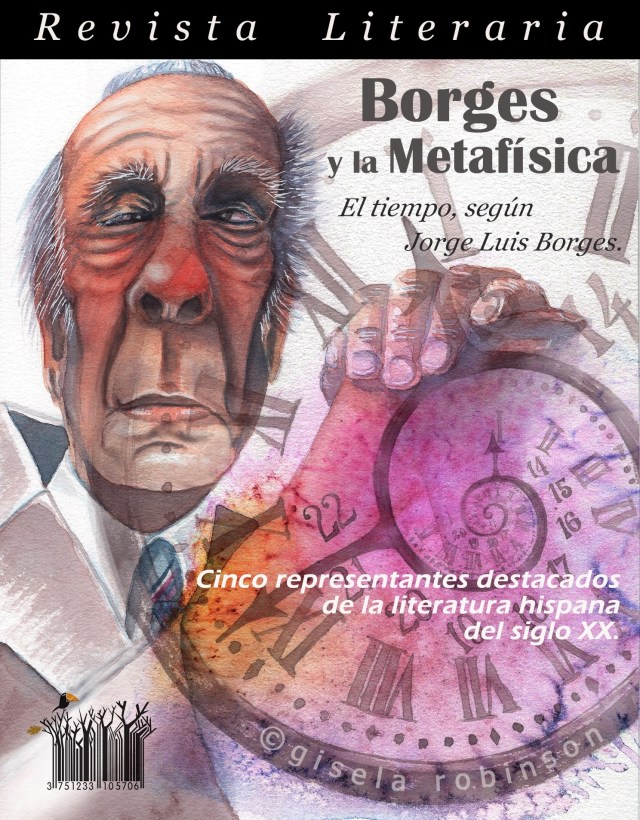
For the cover illustration of my beloved Mr. Borges, I used watercolours. Borges was a metaphysic lover, and time has been present in all his literary work, so here he is with time as a an extra main character in this portrait.
The other portrait of Borges – also in watercolour- came to me as a vision of a quote that I will bring to you today:
“And yet, and yet . . . Denying temporal succession, denying the self, denying the astronomical universe, are apparent desperations and secret consolations. Our destiny is not frightful by being unreal; it is frightful because it is irreversible and iron-clad. Time is the substance I am made of. Time is a river which sweeps me along, but I am the river; it is a tiger which destroys me, but I am the tiger; it is a fire which consumes me, but I am the fire. The world, unfortunately, is real; I, unfortunately, am Borges.”
—Jorge Luis Borges, Otras inquisiciones (1952) (R.L.C. Simms transl.)

The rest of the portraits are made in graphite:
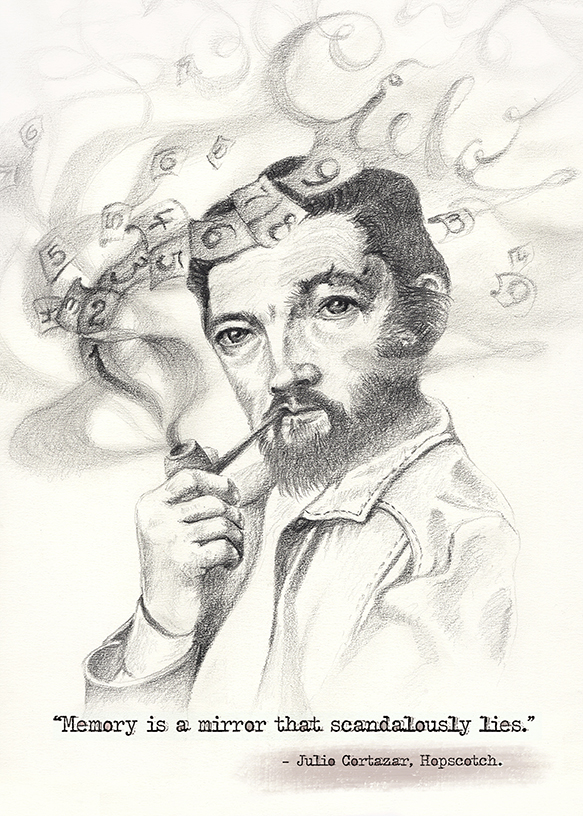
Julio Cortazar, with his famous “Hopscotch”, published in 1963, that can be read back to front or as you please, as Cortazar invites readers to engage with the story providing different reading paths and breaking with the lineal convention. Amazing literary artwork filled with poetry, rich symbolism, and intellectual depth.
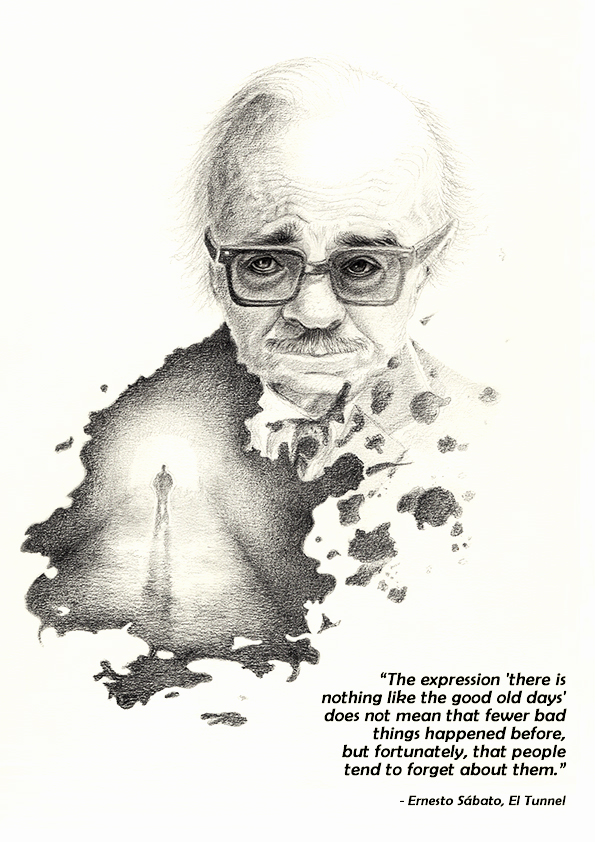
Ernesto Sabato, pictured here with his famous novel The Tunnel. This psychological novel published in 1948 dives in the complexities of human relationships and the fragility of the human psyche. It is rich in its haunting prose and gripping narrative tension. Sabato’s exploration of the darker aspects of the human condition continues to resonate with readers, cementing the novel’s status as a timeless classic of Argentine literature.
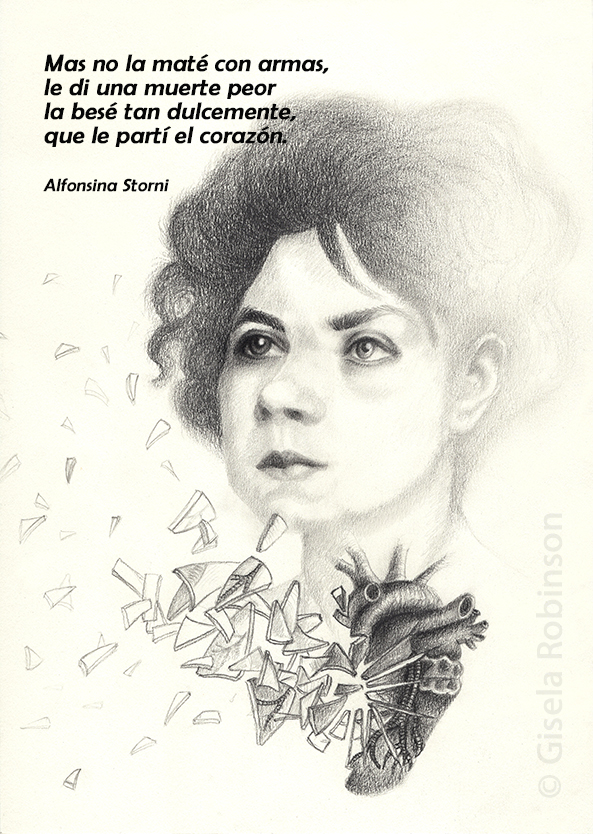
Alfonsina Storni, an influential Argentine poet, essayist, and feminist thinker, born in 1892. Her poetry is characterized by its emotional depth, introspection, and exploration of themes such as love, desire, identity, and the human condition. Her resilience, and unapologetic voice continue to inspire readers and activists around the world, cementing her legacy as one of the most important figures in Argentine literature and feminism.
Gabriela Mistral, Chilean writer, who was the first Latin American author to receive a Nobel Prize in Literature in 1945. “I don’t have Loneliness” is a powerful exploration of the human experience of solitud and the emotions it evokes.

Gabriel García Márquez, Colombian ´writer with his Hundred Years of Solitud, written in 1967 and considered as one of the greatest works of literature of the 20th century. This novel had a profound impact on literature around the world.
Hope that you enjoy this small selection of writers. Please, let me know what do you think of these writers and who are your favourite authors and its books.
Looking forward to hearing from you,
Gisela

 GISELA ROBINSON